
Your needs, this model
Does it fit your priorities?
If STIHL Easy2Start is why you are comparing BG 56 C-E, can a battery handheld be considered when avoiding a recoil-pull routine matters more than owning that exact starter system?
Yes, conditionally: the EGO LB4803 is a current battery handheld above a 412-CFM floor. It has no documented STIHL Easy2Start system; the battery alternative removes the recoil starter rather than reproducing the Easy2Start feature.
Explore this need in the finder →If the 9.3-lb BG 56 C-E body is heavier than you want, can an eligible handheld substitute meet a 412-CFM floor below 8 lb?
The EGO LB5804 is a battery handheld with a documented 580-CFM maximum and 4.77-lb body weight. That body value excludes the 5-Ah battery and does not mean it weighs less when assembled.
Explore this need in the finder →If vacuum collection is necessary, is the blower-only BG 56 C-E the right tool?
No. It has a blower tube, not the suction tube, elbow and bag configuration of a shredder vacuum. The eligible EGO LV5000/LV5005 family can collect leaves, subject to its specific battery and bag setup.
Explore this need in the finder →The practical upgrade is easier starting, not more listed airflow
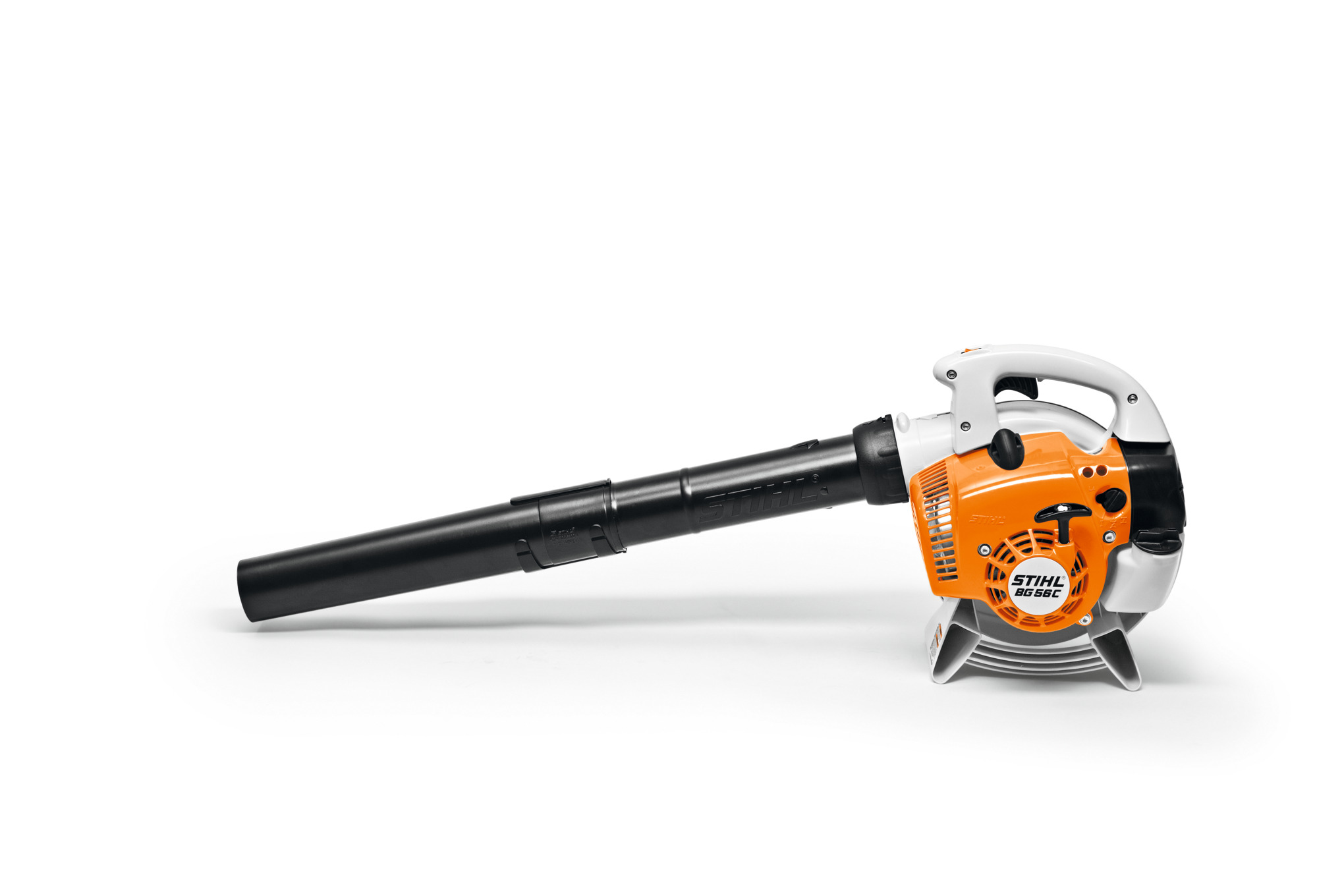
The STIHL BG 56 C-E is a handheld gasoline blower for homeowners who want a conventional round-nozzle blower but prefer STIHL’s Easy2Start recoil system. Its exact US configuration is part number 42410111755US, selected on STIHL’s BG 56 product page. That page publishes 412 CFM, 159 mph, 13 N and 9.3 pounds without refueling. STIHL’s 2025 catalogue lists the same maximum output and a 9.3-pound dry weight. The BG 50 is the lighter sibling: its catalogue dry figure is 7.9 pounds, while its current product page says 8 pounds before refueling.
This is an important comparison because the BG 56 C-E does not claim a higher air-volume maximum than the BG 50. Both are listed at 412 CFM, 159 mph and 13 N with a round nozzle. If you are choosing on those headline airflow values alone, the extra weight is not buying a larger published ceiling. The BG 56 C-E’s meaningful differences are Easy2Start, a larger 18.3-fluid-ounce fuel tank rather than 14.5 ounces, and the product-page description of its 2-MIX engine and one-handed controls.
Easy2Start still uses a starter rope
Easy2Start is not an electric start. The STIHL manual’s starting section distinguishes versions with the system from versions without it: the Easy2Start version is started with a steady pull of the grip, while the other version calls for engaging the rope and then a brisker pull. The exact BG 56 C-E page lists this feature, which makes the model a reasonable technical fit for someone who wants STIHL’s reduced-effort recoil starting. It does not remove the need for a pull cord, priming, fuel mixing, choke procedure or safe setup.
The shared US BG 56/66/86/SH 56/86 instruction manual identifies a 27.2-cc two-stroke engine family and an 18.3-ounce BG 56 fuel tank. The manual’s maximum airflow table includes 430 CFM without a nozzle; STIHL’s current product page and product comparison table give 412 CFM at the round nozzle. Those are different measurement conditions, not a contradiction to hide. For choosing a nozzle-equipped yard blower in the finder, use the 412-CFM at-nozzle figure. The manual’s table also gives 143 mph at the round nozzle, while the current product page and 2025 catalogue publish 159 mph maximum. Because the manufacturer sources use different air-speed bases, do not read the higher figure as a field-tested advantage over the BG 50; both models are listed at 159 mph by the current product-page/catalogue comparison.
Fuel and weight change the ownership plan
At 9.3 pounds before fuel, the BG 56 C-E is a heavier handheld to carry than the BG 50. Its larger tank is useful when comparing machine capacity, but 18.3 ounces does not establish a longer guaranteed cleanup session. Throttle setting, leaves, operator technique and conditions determine consumption. STIHL’s product comparison chart gives both models a 70-dB(A) sound-pressure value; the presence of a manufacturer sound figure is not a promise that this engine will be unobtrusive near people or homes.
As a two-stroke blower, the BG 56 C-E requires mixed gasoline and oil rather than a battery and charger. STIHL recommends gasoline with no more than 10% ethanol. The model page also states that it is not available for purchase or delivery in California. Keep the machine cool before opening its tank, follow the exact operator manual for fuel and starting steps, and make the regular filter and dealer-service plan part of ownership. This is a poor fit for someone who does not want fuel handling, exhaust, a pull starter or the noise of an engine.
When this configuration makes sense—and when it does not
The BG 56 C-E is worth comparing if the STIHL Easy2Start system and gas operation are both deliberate preferences, the heavier body is acceptable, and a blower-only tool is enough. It does not vacuum leaves into a bag. If you need collection and mulching, the STIHL SH 56 C-E is a different machine family configuration, with suction tube, elbow and bag components that change the task and weight; do not treat those attachments as included in this BG 56 blower SKU.
If an easy start is the real need but gas is not, a current battery handheld removes the recoil-start step entirely, though it is not STIHL Easy2Start and it belongs to another power platform. Compare the EGO LB5302 kit when the included battery and charger matter, or use the finder to apply an airflow and carrying-style floor without forcing the BG 56 into a recommendation. The BG 56 C-E remains reference-only here until its exact-model CPSC status is established. That is not a statement that it is recalled or not recalled; it means the site is not treating this technical assessment as a current purchase match.
Primary details: STIHL’s BG 56 product page; STIHL’s US BG 56 family instruction manual; and the 2025 full-line product catalogue.
Key details at a glance
| Maximum published air volume | 412 CFM |
|---|---|
| Manufacturer-listed sound level at 50 ft. | 70 dB(A) |
| Manual-listed maximum air speed | 143 mph |
| Manual-listed maximum blowing force | 13 N |
| Manufacturer-listed tool weight (check basis) | 9.3 lb |
| Batteries in this kit | 0 |
| Nozzles in the kit | round |
| Shoulder strap included | No |
| String trimmer in kit | No |
| Leaf vacuum and mulching function | No |
| Battery included in package | No |
| Charger included in package | No |
| Backpack support harness | No |
| Power source | Gasoline |
| Engine displacement | 27.2 cm³ |
| Engine output | 0.9 hp |
| Fuel tank volume | 0.54 L |
| Air volume at pipe | 430 CFM |
| STIHL Easy2Start | Yes |
| Gasoline tank capacity | 18.3 oz |
| Two-stroke fuel mixture | 50:1 gasoline/two-stroke oil |
| Product-page maximum air velocity | 159 mph |
| Weight measurement basis | No fuel; BG 50 current product page says 8 lb without refueling while manufacturer 2025 table/manual say 7.9 lb dry. Matcher uses conservative 8.0 lb; BG 56 C-E exact page/catalogue say 9.3 lb dry/without refueling. |
Use the exact model’s instructions for operating limits, supplied equipment and version differences.
Sources for this assessment

Match the blower to your yard and routine.
Compare the exact kit, controls, nozzle and carrying setup before choosing.