
Your needs, this model
Does it fit your priorities?
Would a gas handheld fit better than wearing a backpack blower?
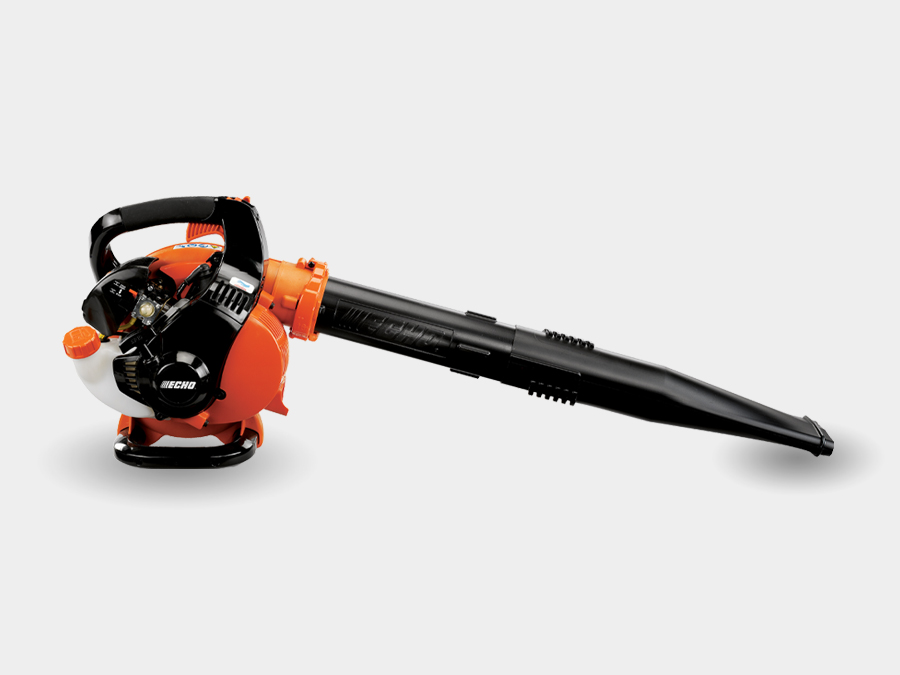
PB-255LN is ECHO's 25.4 cc handheld gas low-noise model. Choose handheld for an in-hand blower arrangement; the PB-265LN is a distinct backpack configuration. Both require two-stroke fuel preparation and recoil starting.
Explore this need in the finder →Is 354 CFM enough if you choose the round nozzle, rather than treating 191 mph as the same output setup?
The current manual assigns 354 CFM/160 mph to the round-end nozzle and 345 CFM/191 mph to the flared-end nozzle. The page headline does not preserve that distinction, so compare the nozzle-specific manual rows instead of assuming both maxima occur together.
Explore this need in the finder →Do you need a blower-only tool rather than a vacuum, shredder and collection bag?
The PB-255LN is a blower, not ECHO's ES-250 Shred 'N' Vac. If vacuuming and bagging are essential, use the leaf-collection choice and compare a configuration with a documented collection plan.
Explore this need in the finder →A handheld engine blower for yards where noise is part of the decision
The ECHO PB-255LN is a 25.4 cc two-stroke gasoline handheld blower. Its product page positions it as a low-noise option for noise-sensitive places, but it is still a gasoline engine: the operator mixes fuel, pulls a starter, manages exhaust and maintains the engine. A homeowner who wants to clear a driveway, walk or modest lawn edge without wearing a backpack may prefer that format. Someone who wants a battery-and-switch routine, leaf collection or a shoulder-supported setup should start elsewhere.
It is important to read the PB-255LN's performance by pipe rather than repeat the product-page headline as if both maxima occur together. ECHO's current operator manual lists 354 CFM and 160 mph with the round-end nozzle, and 345 CFM and 191 mph with the flared-end nozzle. The product page's short copy pairs 354 CFM with 191 mph; the manual does not. If you compare these numbers, keep the attachment and the manual's basis visible. They are manufacturer ratings, not a promise that a particular leaf pile will move at a certain speed.
Two pipe ratings, one practical tradeoff
The round-end setup is the manual's higher-volume choice: 354 CFM versus 345 CFM through the flared end. The flared end has the higher listed air speed, 191 rather than 160 mph. The manufacturer's page highlights that flared pipe because it increases air speed, but the exact contents of every retail box are not established by the product photo. If an included nozzle is essential, check the actual package listing instead of assuming a picture shows every supplied item.
This modest blower is a fit question, not a ranking by one peak number. It can make sense for routine dry-leaf movement and targeted work where a handheld body is easier to store than a backpack. Wet leaves, packed debris or large open areas may call for a different airflow plan, more time, or a higher-output model. ECHO's PB-2620, for example, has a higher published CFM figure and distinct round/flat-pipe ratings; it is not the same low-noise configuration. If you care most about small-tool output, compare its pipe-specific values and the included setup rather than assuming the PB-255LN's 191-mph flared-nozzle rating is a 354-CFM result.
Low-noise marketing is not a permission slip
ECHO calls the PB-255LN low-noise and describes a rating at 50 feet under ANSI B175.2, but the current page does not present one consistent number: the copy and specification table show 64 dB(A) in places and a feature callout says 65. The current 10/23 manual lists 65 dB(A); it also lists the earlier P429 serial generation at a different value. Because those manufacturer records disagree, this assessment does not use a strict sound ceiling as a match condition. A 50-foot test figure is not a reading at the operator's ear, proof that a local ordinance permits use, or a substitute for hearing protection.
Weight also needs a basis. The current product page lists 10.2 pounds dry with standard pipes; the P604-series manual says 9.3 pounds dry without defining the same pipe basis. Neither figure includes fuel, and the difference is not enough evidence to promise a particular ready-to-work weight. If a strict weight limit matters, the available specifications do not settle it. The page and current manual do agree on a 16.9-fluid-ounce fuel tank; tank capacity does not predict runtime.
Fuel preparation and start-up belong in the ownership plan
The current PB-255LN manual calls for a 50:1 gasoline-to-two-stroke-oil mix and 89-octane unleaded gasoline, with restrictions on fuel composition and no E-15 or E-85. That means measuring the right oil, storing fresh premix safely and following the manual's fuel handling instructions. Cold starting uses the stop switch, throttle position lever, choke, purge bulb and recoil starter. ECHO's written procedure also calls for a warm-up before work. This is not the maintenance-free alternative to charging a battery; it is a choice to keep an engine-based handheld in service.
The manual includes safety, pipe assembly, operation, cleaning and storage steps. For a used unit, the exact serial range matters: the current X7531181700 manual covers P60412001001 through P60412999999, while the earlier X7501186402 manual covers P42914001001 through P42914999999. Use the instruction set that matches the machine rather than assuming every PB-255LN revision is identical. ECHO lists a consumer warranty on the current model page; actual coverage depends on the specific purchase and use.
When to choose another work plan
If fuel mixing and recoil starting are the friction point, a battery handheld such as the EGO LB5302 changes the routine: charge a compatible pack instead of preparing two-stroke fuel, while accepting battery weight, recharge planning and a different airflow rating. If the job is too large for a small handheld, the PB-265LN is ECHO's backpack alternative, but it uses a harness and hip-mounted throttle rather than the PB-255LN hand grip. If bagging leaves is essential, compare a real vacuum/mulcher system such as the EGO LV5005 instead of treating a blower as a collection tool.
Keep the PB-255LN in the comparison when you want ECHO's current low-noise-marketed handheld and can accept a gas maintenance routine. Its strongest evidence-based distinction is the nozzle-specific operating profile, not a single combined speed-and-volume headline. Confirm the exact package contents, use the manual for your serial, and treat its noise and weight figures as unresolved limits rather than assuming the most convenient figure is the whole story.
Compare the PB-265LN backpack model · Read the ECHO PB-2620 assessment · Compare a battery handheld · Compare a leaf vacuum/mulcher · ECHO PB-255LN product page
Key details at a glance
| Maximum published air volume | 354 CFM |
|---|---|
| Manual-listed maximum air speed | 191 mph |
| Batteries in this kit | 0 |
| Limited warranty | The current exact U.S. product page lists 5 years consumer / 2 years commercial; confirm applicability to the purchase and use. |
| Exact package configuration | The exact U.S. model page identifies a blower and gives standard-pipe performance/weight values. This review does not claim an exact boxed nozzle inventory from the product image. |
| String trimmer in kit | No |
| Leaf vacuum and mulching function | No |
| Battery included in package | No |
| Charger included in package | No |
| Blower carrying style | Handheld |
| Power source | Gasoline |
| Engine displacement | 25.4 cm³ |
| Fuel tank volume | 0.5 L |
| Air volume at pipe | 354 CFM |
| STIHL Easy2Start | No |
| Gasoline tank capacity | 16.9 oz |
| Two-stroke fuel mixture | 50:1 gasoline and two-stroke air-cooled engine oil meeting ECHO's listed ISO-L-EGD and J.A.S.O. M345-FD specifications. |
| Product-page maximum air velocity | 191 mph |
| Manufacturer-listed weight | 10.2 lb |
| Weight measurement basis | Current product page lists 10.2 lb dry with standard pipes; the 10/23 manual lists 9.3 lb dry without stating a comparable standard-pipe basis. No strict weight maximum uses either figure. |
Use the exact model’s instructions for operating limits, supplied equipment and version differences.
Sources for this assessment

Match the blower to your yard and routine.
Compare the exact kit, controls, nozzle and carrying setup before choosing.